How to Choose the Right Micron for Hand Stretch Film
Estimated reading time 6 minutes
The right micron for hand stretch film depends on the weight, shape and value of the load and how far it is travelling. As a general guide, 12 to 15 micron suits light, regular loads, 17 to 20 micron covers most mixed loads, 23 micron is a strong choice for heavier pallets, and 25 to 30 micron is best for heavy, sharp-edged or irregular loads on demanding routes. Choosing the right gauge for each load type keeps pallets secure without paying for film you do not need.
This guide explains what micron means, maps common load types to the right film and highlights the mistakes buyers make most often when specifying hand wrap.
What does micron mean in stretch film?
Micron (shown as mu or µm) measures the thickness of the film. One micron is one thousandth of a millimetre, so a 20 micron film is 0.02mm thick. You may also see film described in gauge, which is common in US specifications: 1 micron is roughly 4 gauge, so 80 gauge film is about 20 micron.
Thicker film offers more puncture resistance and holding force, but it costs more per roll and adds more plastic to every pallet. Thinner film is cheaper and lighter, but it is more likely to tear on sharp corners or let a heavy load shift. The aim is to find the lightest gauge that reliably secures each load.
Stretch film micron guide by load type
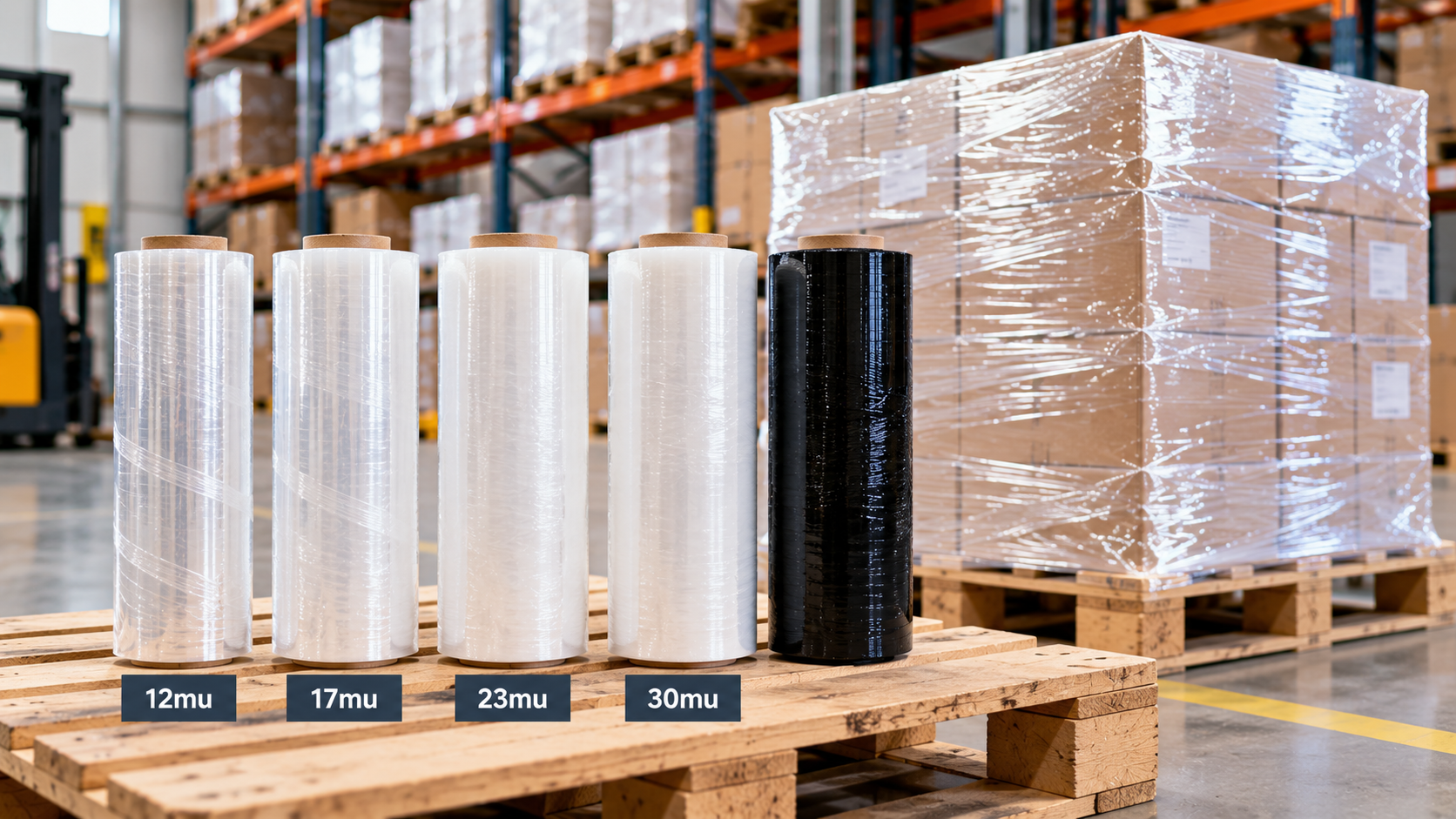
Our hand stretch film range runs from 12 to 30 micron in 400mm and 500mm widths, in clear and black. Use the guide below as a starting point:
Light, regular loads: 12 to 15 micron
Lightweight, evenly stacked boxes on short local runs, such as dry goods, light cartons and packaging, can be secured with 12 micron hand stretch film or 15 micron. These thinner gauges keep cost per pallet low where load forces are small.
Mixed and standard loads: 17 to 20 micron
Most ambient grocery, mixed retail and general distribution pallets fall into this category. 17 micron hand stretch film suits lighter mixed loads, while 20 micron gives extra security for standard distribution and multi-drop routes.
Heavy loads: 23 micron
Pallets of bottled drinks, tins, jars or dense products put more strain on the film. 23 micron hand stretch film provides the holding force and puncture resistance these loads need, without moving to the heaviest gauges.
Heavy, sharp-edged or irregular loads: 25 to 30 micron
Loads with sharp corners, uneven shapes, metal components or high value, especially on long or rough journeys, need the strongest film. 30 micron hand stretch film gives maximum puncture resistance and containment for the most demanding applications.
Other factors that affect your micron choice
- Journey type: long, multi-drop or rough routes create more movement and vibration, so step up a gauge for demanding journeys.
- Storage conditions: loads stored outdoors or for long periods may need a heavier film, or black film for UV protection.
- Sharp edges: corner boards or a heavier gauge prevent tearing on boxes and products with hard corners.
- Security: black film hides load contents and helps deter pilferage. Our black hand stretch film is available in several gauges.
- Film width: 500mm film covers larger loads in fewer passes, while 400mm is lighter and easier for smaller pallets and less experienced operatives.
- Hygiene: for food loads, adding pallet top sheets protects the top layer, which stretch film alone does not cover.
The cost vs protection trade-off
A heavier gauge does not automatically mean a more secure pallet, and a lighter gauge does not automatically mean a cheaper one. The real cost of stretch film is measured per pallet, and it includes the cost of damaged goods and re-deliveries when a film fails.
Overspecifying wastes money and plastic on every pallet. Underspecifying saves a little on film but risks load shift, damage claims and rejected deliveries, which almost always cost more than the film saved. The best approach is to profile your loads, match a gauge to each profile and test it on real routes. For more ways to cut film use, read our guide on how to reduce pallet wrap costs.
Common mistakes buyers make when specifying hand wrap
- Using one gauge for everything. A single heavy gauge wastes film on light loads, while a single light gauge fails on heavy ones.
- Choosing on roll price alone. Cost per pallet is the measure that matters.
- Underspecifying heavy loads to save money. The savings disappear with the first collapsed pallet.
- Ignoring technique. Poor tension and too few base wraps cause failures that are often blamed on the film.
- Never reviewing the specification. Load types change over time, so check your film choices at least once a year.
When to consider machine stretch film
If you wrap a high volume of pallets every day, machine film may offer better consistency and lower film use per pallet. Our guide to hand stretch film vs machine stretch film explains when the switch makes sense, and our guide to packaging for grocery distributors shows how stretch film fits into a full distribution specification.
Frequently asked questions
What micron stretch film do I need?
Use 12 to 15 micron for light, regular loads, 17 to 20 micron for most mixed loads, 23 micron for heavy pallets and 25 to 30 micron for heavy, sharp-edged or irregular loads.
What micron stretch film is best for heavy pallets?
Heavy pallets usually need 23 micron film. For heavy loads with sharp edges, irregular shapes or long journeys, 25 to 30 micron gives more puncture resistance and holding force.
Is 17 micron or 23 micron stretch film better?
Neither is better in every case. 17 micron suits lighter mixed loads and costs less per pallet, while 23 micron is stronger and better for heavy or demanding loads.
What is the difference between micron and gauge?
Both measure film thickness. Micron is the metric measure used in the UK and Europe, while gauge is common in US specifications. One micron is roughly equal to 4 gauge.
Get the right stretch film specification
The right micron keeps every pallet secure for the lowest film cost. Our team works with warehouse, logistics and procurement managers across the distribution and wholesale sectors to match film to load types. To review your specification or request samples, contact us.